Sponsored

Why do Rivians charge so slow?

mindstormsguy

Well-Known Member
Joined
Jan 3, 2021
Threads
10
Messages
327
Reaction score
651
Location
Seattle area
Vehicles
Some
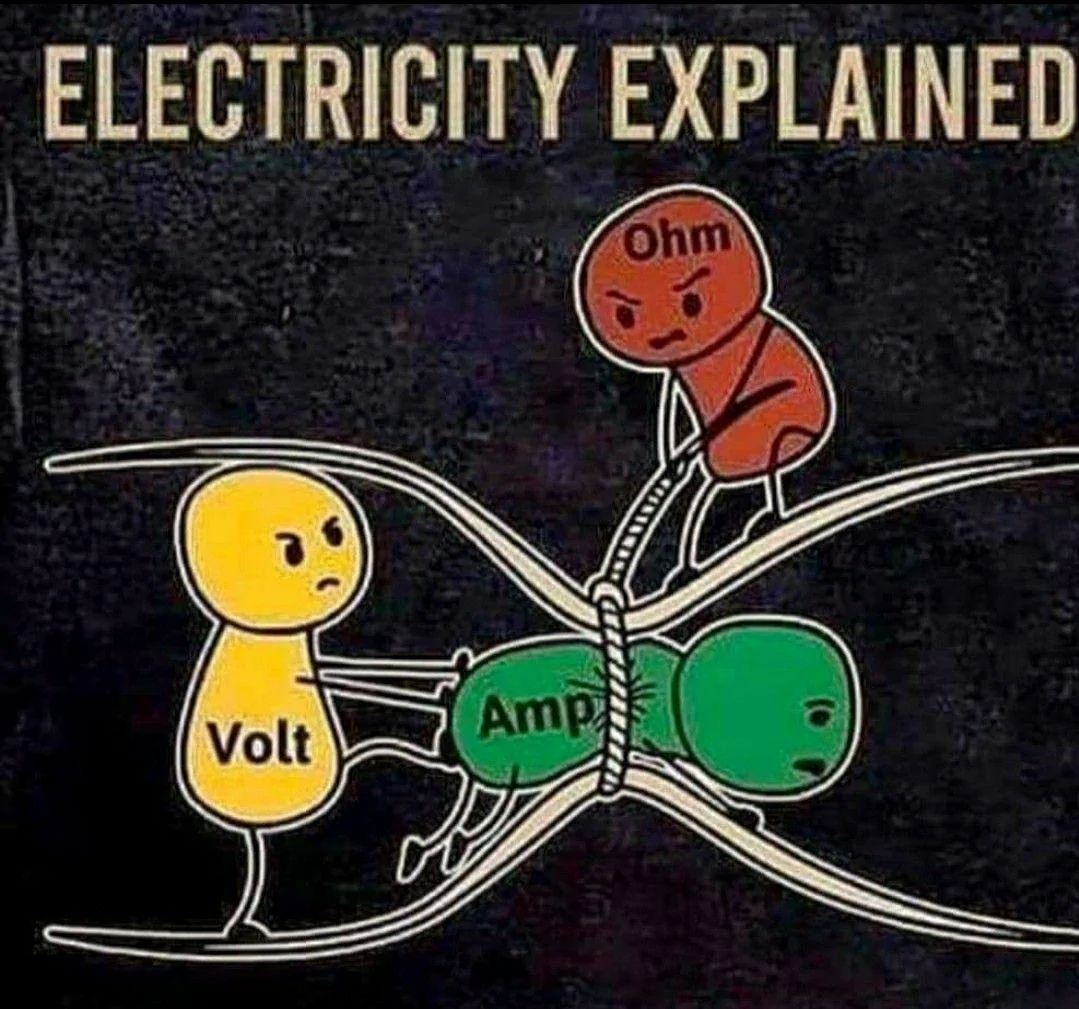
Everyone who is pointing out the gallons per minute fuel filling analogy is missing a key point. Batteries are not tanks of liquid. With gasoline, the pump at the station is basically what sets your refueling rate. That’s not how EVSE and battery technology works though. With batteries, all else being equal, the charge speed should be proportional to the size of the battery. It’s called “C rate”.

It’s common or standard for a battery (of basically any type) to charge at 1C. If a battery is 10Ah, then 1C = 10A, and charging would take 1 hour (or a little longer, because of tapering at the end). If a battery is 100Ah, then 1C = 100A, and charging takes… 1 hour!

So, if an EV is half as efficient as another, but it has a battery twice as large (to get the same range) it doesn’t matter. A battery twice the size should be able to charge twice as fast. Or put another way, if two EVs have the same charge rate in terms of C, then they’ll have the same charge time. Regardless of the size of the pack.

At the individual cell level, all there is is C. The cells don’t care how many volts and amps are delivered to the pack, they care how many C is delivered to them directly.

Unless an EV is maxing out at 1000V and 500A (the CCS limit), it’s not fair IMO to say “well, of course it charges slower, it’s a bigger battery”. The EVSE is not the limiting factor. Nor is the individual cell capability. The limiting factor is the design of the pack/vehicle itself. Either a cell selection that is simply not capable of the same type of individual charging curve, a more conservative design, a voltage limitation because the vehicle uses older transistor technology limiting to 400V, or a bad cooling system.

If you took two Rivian packs, wired them in series, and hooked them up to a single EA EVSE that is capable of 1000V (as most are) you’d add twice as many MPH. Why? Because you’d use the full voltage available from the EVSE, and you’d have twice as much cooling capacity.
Sponsored


 

Ziggy

Member
Joined
Nov 21, 2023
Threads
2
Messages
20
Reaction score
27
Location
Plainfield
Vehicles
Rivian r1s
Occupation
retired
Clubs
 
I've road-tripped both the Tesla Model 3 performance (2020) and Rivian r1s (2023, 3300 miles, deliver 11/4/23). Working the bottom of the battery is harder due to reliability of the EA network, but when you do average time at each stop for Model 3 was 15-25 min (V3 superchargers, 250 KW max rate) vs. 25-40 min for the r1s (EA chargers max speed around 210-220 KW).

Once the Tesla network opens up for us we should be able to more aggressively work the bottom of the battery (arrive at 10% or less), but the time needed before leaving for the next charger will be inherently longer versus most other EVs. Its the price you pay to drive a car than can get you to Moab or similar and then do serious off-road adventuring.

Really need 350KW charging rates from 10-80% to make the time difference a moot point IMHO. Towing is really out of the question until 350+ KW rates and 200+ kWh batteries become the norm.
 

jjswan33

Well-Known Member
First Name
Joshua
Joined
Sep 17, 2021
Threads
135
Messages
4,455
Reaction score
9,876
Location
Sandy, OR
Vehicles
Rivian R1T LE, Hyundai Ioniq 5 Limited
Occupation
Engineer
Clubs
 
Everyone who is pointing out the gallons per minute fuel filling analogy is missing a key point. Batteries are not tanks of liquid. With gasoline, the pump at the station is basically what sets your refueling rate. That’s not how EVSE and battery technology works though. With batteries, all else being equal, the charge speed should be proportional to the size of the battery. It’s called “C rate”.

It’s common or standard for a battery (of basically any type) to charge at 1C. If a battery is 10Ah, then 1C = 10A, and charging would take 1 hour (or a little longer, because of tapering at the end). If a battery is 100Ah, then 1C = 100A, and charging takes… 1 hour!

So, if an EV is half as efficient as another, but it has a battery twice as large (to get the same range) it doesn’t matter. A battery twice the size should be able to charge twice as fast. Or put another way, if two EVs have the same charge rate in terms of C, then they’ll have the same charge time. Regardless of the size of the pack.

At the individual cell level, all there is is C. The cells don’t care how many volts and amps are delivered to the pack, they care how many C is delivered to them directly.

Unless an EV is maxing out at 1000V and 500A (the CCS limit), it’s not fair IMO to say “well, of course it charges slower, it’s a bigger battery”. The EVSE is not the limiting factor. Nor is the individual cell capability. The limiting factor is the design of the pack/vehicle itself. Either a cell selection that is simply not capable of the same type of individual charging curve, a more conservative design, a voltage limitation because the vehicle uses older transistor technology limiting to 400V, or a bad cooling system.

If you took two Rivian packs, wired them in series, and hooked them up to a single EA EVSE that is capable of 1000V (as most are) you’d add twice as many MPH. Why? Because you’d use the full voltage available from the EVSE, and you’d have twice as much cooling capacity.
Folks like you are missing the point that the efficiency of the vehicle matters when you are using miles added as a metric for charging speed. The study from Edmunds isn't looking at C it's looking at miles added per hour.
 

CrazyOne

Well-Known Member
Joined
Oct 30, 2021
Threads
3
Messages
1,353
Reaction score
1,146
Location
WA
Vehicles
R1T
At 75mph, the Hyundai has 100 miles less range than advertised. There may be a difference, but isn't nearly as big as it might seem. Others have raised several valid points. If cells are the same, increased charge rate per cell will cause more degradation.
 

mindstormsguy

Well-Known Member
Joined
Jan 3, 2021
Threads
10
Messages
327
Reaction score
651
Location
Seattle area
Vehicles
Some
Folks like you are missing the point that the efficiency of the vehicle matters when you are using miles added as a metric for charging speed. The study from Edmunds isn't looking at C it's looking at miles added per hour.
No, I’m not missing that point. Let me explain with two hypothetical EVs:

EV A: 300 mile range car, with a 5mile/kWh efficiency. This requires a 60kWh pack (300 / 5). Let’s say the cells can charge at 3C average. This would be 180kW (3 * 60). 180kW for a vehicle that does 5miles/kWh is 900miles/hour charging.

EV B: 300 mile range truck, with a 2.5mile/kWh efficiency. This requires a 120kWh pack (300 / 2.5). Let’s say the cells can charge at 3C average. This would be 360kW (3 * 120). 360kW for a vehicle that does 2.5miles/kWh is 900miles/hour charging.

For the same total range, and the same charging rate at the cell level in C, the miles added per hour is the same. The difference is only that the larger pack vehicle needs more kW (but this is only an EVSE limit if you get to 1000V * 500A = 500kW charging speeds), and that the larger pack will have a lot more load on a cooling system. But until we have trucks hitting 500kW for the entire charge session, there’s no reason that a truck needs to charge slower than a car even in terms of mph of charge added.
 

Sponsored

jjswan33

Well-Known Member
First Name
Joshua
Joined
Sep 17, 2021
Threads
135
Messages
4,455
Reaction score
9,876
Location
Sandy, OR
Vehicles
Rivian R1T LE, Hyundai Ioniq 5 Limited
Occupation
Engineer
Clubs
 
No, I’m not missing that point. Let me explain with two hypothetical EVs:

EV A: 300 mile range car, with a 5mile/kWh efficiency. This requires a 60kWh pack (300 / 5). Let’s say the cells can charge at 3C average. This would be 180kW (3 * 60). 180kW for a vehicle that does 5miles/kWh is 900miles/hour charging.

EV B: 300 mile range truck, with a 2.5mile/kWh efficiency. This requires a 120kWh pack (300 / 2.5). Let’s say the cells can charge at 3C average. This would be 360kW (3 * 120). 360kW for a vehicle that does 2.5miles/kWh is 900miles/hour charging.

For the same total range, and the same charging rate at the cell level in C, the miles added per hour is the same. The difference is only that the larger pack vehicle needs more kW (but this is only an EVSE limit if you get to 1000V * 500A = 500kW charging speeds), and that the larger pack will have a lot more load on a cooling system. But until we have trucks hitting 500kW for the entire charge session, there’s no reason that a truck needs to charge slower than a car even in terms of mph of charge added.
I still say that the truck in your hypothetical example charges 2X faster then the car. This thread is literally the first time I have seen anyone use the metric C for charging speed, it might make sense for consumer electronics but when we are talking about 180kW sustained speeds vs 360kW sustained speeds then you are living in a future world because that is just not how EV charging works today.

That said if someone releases a truck that can charge a sustained 360kW charging speed then sign me up
 

momo3605

Well-Known Member
Joined
Mar 25, 2022
Threads
20
Messages
325
Reaction score
332
Location
SF Bay Area
Vehicles
Lucid Air, 718 Spyder
I think the Rivian's charge cure is fantastic. Yes the miles/hr peak is low because the battery is huge and the vehicle is heavy/inefficient, BUT it charges at 200KW from 0 to past 50%. Majority of EVs are already at 100KW or less by 50%, even the 800V Lucid.

So yes, at the bottom of the pack where some cars peak at a very high 800-1000mph, sure, the Rivian is not great, but for the majority of the charge curve, the rivian is pulling double the kw compared to smaller cars with half the battery capacity.
 

mindstormsguy

Well-Known Member
Joined
Jan 3, 2021
Threads
10
Messages
327
Reaction score
651
Location
Seattle area
Vehicles
Some
Yes, electrically speaking it would be twice as fast. I don’t really have interest in the language we use to compare two dissimilar vehicles though. I won’t argue semantics - that’s a losing argument for all involved. My point is simply that it’s not unreasonable (technology speaking) to expect a Rivian to add as many miles per hour of charging as any other vehicle.
 

mindstormsguy

Well-Known Member
Joined
Jan 3, 2021
Threads
10
Messages
327
Reaction score
651
Location
Seattle area
Vehicles
Some
I think the Rivian's charge cure is fantastic. Yes the miles/hr peak is low because the battery is huge and the vehicle is heavy/inefficient, BUT it charges at 200KW from 0 to past 50%. Majority of EVs are already at 100KW or less by 50%, even the 800V Lucid.

So yes, at the bottom of the pack where some cars peak at a very high 800-1000mph, sure, the Rivian is not great, but for the majority of the charge curve, the rivian is pulling double the kw compared to smaller cars with half the battery capacity.
My 2019 etron pulls 150kW constantly all the way to 80%. And it’s a much smaller pack than the R1T (making it more impressive).

Rivian’s curve is mediocre.
 

momo3605

Well-Known Member
Joined
Mar 25, 2022
Threads
20
Messages
325
Reaction score
332
Location
SF Bay Area
Vehicles
Lucid Air, 718 Spyder
My 2019 etron pulls 150kW constantly all the way to 80%. And it’s a much smaller pack than the R1T (making it more impressive).

Rivian’s curve is mediocre.
to be fair, the etron and taycan do have the fastest charging curves. But other than those, rivian is definitely top 5 for charging rate above 50%.
 

Sponsored

usulio

Well-Known Member
Joined
Jun 2, 2023
Threads
8
Messages
1,031
Reaction score
1,249
Location
CO
Vehicles
R1S
Clubs
 
My 2019 etron pulls 150kW constantly all the way to 80%. And it’s a much smaller pack than the R1T (making it more impressive).

Rivian’s curve is mediocre.
It is possible Audi is willing to stress and degrade the battery much more than Rivian.
 

mindstormsguy

Well-Known Member
Joined
Jan 3, 2021
Threads
10
Messages
327
Reaction score
651
Location
Seattle area
Vehicles
Some
Rivian is certainly not bad. I really would like better performance above 50%, especially when towing. The F150 is no better though I don’t think.

I think Rivian’s biggest issue is thermals.

I’m hoping for great things for Rivian’s next gen. Time will tell.
 

shap

Well-Known Member
Joined
Nov 18, 2021
Threads
16
Messages
870
Reaction score
765
Location
Austin,TX
Vehicles
BMW 45e, R1T
Clubs
 
It is possible Audi is willing to stress and degrade the battery much more than Rivian.
eTron is a really special case - they have a very expensive battery with a lot of cobalt that allows a constant charging rate till almost full. I do not know any other EV that does the same.
 

voxel

Well-Known Member
First Name
Nelson
Joined
Sep 12, 2021
Threads
1
Messages
160
Reaction score
150
Location
Altamonte Springs, FL
Vehicles
Mach-E 4X, 23 GC Limited, R1S Launch Green
Clubs
 
My 2019 etron pulls 150kW constantly all the way to 80%. And it’s a much smaller pack than the R1T (making it more impressive).

Rivian’s curve is mediocre.
Yes... 2C charging.

Rivian is barely 1C charging most of the time.
Sponsored


Top