
Sponsored

Charge to 70% or 80% ?

UnsungZero_OldTimeAdMan

Well-Known Member
First Name
Barnum
Joined
Mar 20, 2023
Threads
66
Messages
8,536
Reaction score
11,722
Location
SoCal
Vehicles
'23 GW Quad-Large R1T "Ghost"
Occupation
Advertising Circus
Hi all, new to EV ownership (picked up my R1T Max less than 24 hours ago).
I’ve read here and elsewhere that charging to 80% regularly is best practice for extending battery life.
My Rivian Guide yesterday at pickup of vehicle was recommending 70%
Curious as to thoughts here?
Thanks!
Oh, and loving my new Rivian!
Engineering Explained on YouTube has excellent videos on changing, for NMC and LFP packs. There is also one on DC Fast Charging. Not short form, but IMO essential knowledge. The videos explain how and why packs degrade, even at molecular level, which yields understanding of what not to do.

You are fine to charge to 80%. Rivian’s recommendation of 70% is a very safe one. Do whichever works for you based on your usage.
Sponsored
 

Hereforthesnacks

Well-Known Member
Joined
Jun 6, 2024
Threads
3
Messages
1,232
Reaction score
1,460
Location
West Coast
Vehicles
Ford Bronco
I’ve gotten mixed answers on charging to 100% once in a while (once a month or so) to calibrate the battery and software. Anyone else hear this?
 

LL75

Well-Known Member
First Name
lance
Joined
Sep 21, 2022
Threads
43
Messages
1,754
Reaction score
1,282
Location
Dallas
Vehicles
R1S, R1T, Silverado, F150, RangeRover Evoque
had my 2023 quad r1s for almost two years. charged to 80% daily and occasional 100% on trips. Everything still perfect battery wise
 

runwithscissors

Well-Known Member
Joined
Feb 10, 2021
Threads
2
Messages
466
Reaction score
497
Location
NY
Vehicles
XC90, MDX, R1S
Or if you lease, 100%. I'll stick with 60% but I doubt it would make a huge difference from recommended 70%.
 

UnsungZero_OldTimeAdMan

Well-Known Member
First Name
Barnum
Joined
Mar 20, 2023
Threads
66
Messages
8,536
Reaction score
11,722
Location
SoCal
Vehicles
'23 GW Quad-Large R1T "Ghost"
Occupation
Advertising Circus
IMO there’s no point charging to 100%—i.e. spending time and paying to add electrons you don’t need—unless the occasions where you actually and absolutely need it. Regardless of battery chemistry or leasing. Resistance increase as the packs get fuller with electrons. Resistance affect charging speed/curve negatively. Resistance produces heat, which is a product of wasted energy. It isn’t just about ownership or ethics. There are practical reasons, that affect you personally, against changing to 100% regularly.
 
Last edited:

Sponsored

LL75

Well-Known Member
First Name
lance
Joined
Sep 21, 2022
Threads
43
Messages
1,754
Reaction score
1,282
Location
Dallas
Vehicles
R1S, R1T, Silverado, F150, RangeRover Evoque
I leased one of my rivian and have no intention to buy out after the lease. However, I don't want to abuse it to charge it to 100%. It is unethical imo.
 

R1TandMe

Well-Known Member
First Name
Mike
Joined
Aug 29, 2024
Threads
13
Messages
223
Reaction score
277
Location
Depends
Vehicles
R1T, Corvette, Audi A7, HD VRod
Occupation
Retired and loving it
I find these conversations interesting. Been charging my pdm to 70% about every other day. I’m retired so no set amount of driving daily. Based on the comments already posted the only change I’m making is charging every three days. Letting the battery get to about 30%.
 

mikehmb

Well-Known Member
First Name
Mike
Joined
Jan 12, 2022
Threads
154
Messages
2,303
Reaction score
5,223
Location
SF Bay Area
Vehicles
My name is Mike, and I have a (car) problem
A critical piece of data to consider: High SOC (approaching 100%) at high temps (over 100F) = increased degradation. Anything below 80% regularly is almost certainly fine, as others have said.

I have an 80-ish mile commute (R/T) so do 70% daily and brings me to 40%ish, repeat.

The other key to minimizing degradation is reducing the depth of discharge between charging cycles. Recharging 10 times from 50-60% is less stressful than 1 charge from 0-100%.
 

DayTripping

Well-Known Member
First Name
Timothy
Joined
Sep 12, 2024
Threads
13
Messages
1,544
Reaction score
2,133
Location
DFW
Vehicles
Gen1 R1T QM, S Plaid, Highland 3 Perf, 3 Long Range, R2 on order
Occupation
Consultant
Why have a high SoC than you need? There is no upside to it. All the manufacturer cares about (for the most part) is that you don't have a warranty claim due to degradation. They don't necessarily suggest what will minimize degradation, mostly what will make sure you get to the other end of the warranty period without a claim. Go read the Tesla forums if you want more info. This has been rehashed to death and the chemistry is the same. These cells have been around for a long time.

I offered concrete options that I know work. I followed Tesla's recommendations on my first S (P100D) and Model Y Long Range. They degraded FAR more, in similar usage and climate, as my subsequent refreshed Model S long range, Model S Plaid, Model 3 long range and Highland Model 3 performance. The last is too new to really tell but no measurable degradation on it at this point and my Y long range had 3% at this time.

Not a single one of my Teslas where I have followed the protocol I recommended have more than 3% degradation at almost 3 years in. My Model Y is now at almost 15% and it is only 6 months older. I am in a very hot climate which is worse for the batteries too. Colder climate aren't as demanding on them in some ways.

I keep them charged in all the time as they can do battery maintenance in the background like balance cells. I can more easily pre cool or heat the cars/truck from shore power instead of using the battery.

In the 3 years I've followed this approach, there is only 1 time I needed to make a stop a a supercharger to have enough juice to do what I wanted to do. You may say you won't keep the car long term so it doesn't matter. I want to be a good steward of our resources and recycling these batteries is expensive and not easy or clean to do.

On my Plaid, it takes advantage of the full power of the pack. So once you start to have significant degradation, that car WILL slow up. My car is almost 3 tenths in the 1/4 quicker than a friend's whose car is newer but has more degradation. I assume because he followed Tesla's recommendations to charge to 80% daily. I know I charged more times to 100% than he ever did but I only do it just before going to the track where I know I will have it drop down very quickly to a better SoC for less degradation.

I use services like Recurrent to compare my cars charges against the fleet of cars the monitor and other apps. Every one of my cars shows in the top 1% of maximum range. My Y is in the 35%. It is your car, you do as you wish. The only time I vary from keeping around 50-55% is in the winter. I want more of a buffer and the studies have shown that the batteries handle higher SoC's better in cold weather.

This is a bad analogy, but it will get the point across. Think of revving your ICE motor to 5,000 rpm while in neutral just sitting in a parking lot. What does that accomplish? All revved up and no place to go.

I've read so many papers on this that really get into the weeds on this. I'll again post this link as it is one of the more concise and easily digestible overviews I've seen. I don't want to give up any of the range or performance I paid for and this is overview will really help.

https://batteryuniversity.com/article/bu-808-how-to-prolong-lithium-based-batteries
 

Electrified Outdoors

Well-Known Member
First Name
Ken
Joined
Jan 30, 2023
Threads
63
Messages
3,682
Reaction score
3,980
Location
Mount Airy, Maryland
Website
EVoutdoors.org
Vehicles
2024 Rivian R1S Quad, 2024 Silverado EV RST First Edition
Occupation
Real Estate
Clubs
 
Here is a video I created with my opinion on it. Set it to 70% if you can use that daily without running below 20%. This will provide the best battery longevity.

2025+ standard range vehicles should be charged to 100% every two weeks to keep the BMS happy


Sponsored

HaveBlue

Well-Known Member
Joined
Nov 22, 2022
Threads
41
Messages
2,926
Reaction score
2,234
Location
91107
Vehicles
R1S DMP Max, Lifted GX470, APR Audi A7, BMW 325Ci
Clubs
 
I’ve gotten mixed answers on charging to 100% once in a while (once a month or so) to calibrate the battery and software. Anyone else hear this?
Lfp packs need to be charged to 100% occasionally to recalibrate the electronics. However they are the same as NMC in that they don't like it.

Lots of good advice here on generally not going to 100 unless you need it but it's not deadly to the pack by any means.

My advice is charge it to the minimum range you can stand. I go to 70 and recharge around 20 so I'm only using half the capacity. That is fine for around town back and forth to work. If I was commuting longer distances daily, I would be charging higher to avoid the annoyance of plugging in all the time. I'm used to my 400 mile range Audi where a gas stop was every two weeks. The max pack can do that too but refill is in my driveway so I'm more tolerant.
 

moosetags

Well-Known Member
First Name
SuEllyn & Brian
Joined
Dec 25, 2021
Threads
110
Messages
1,940
Reaction score
3,219
Location
Santa Rosa Beach, Florida
Vehicles
2023 R1T; 2020 Chevy Duramax; 1956 Ford Tbird
Occupation
Retired
Clubs
 
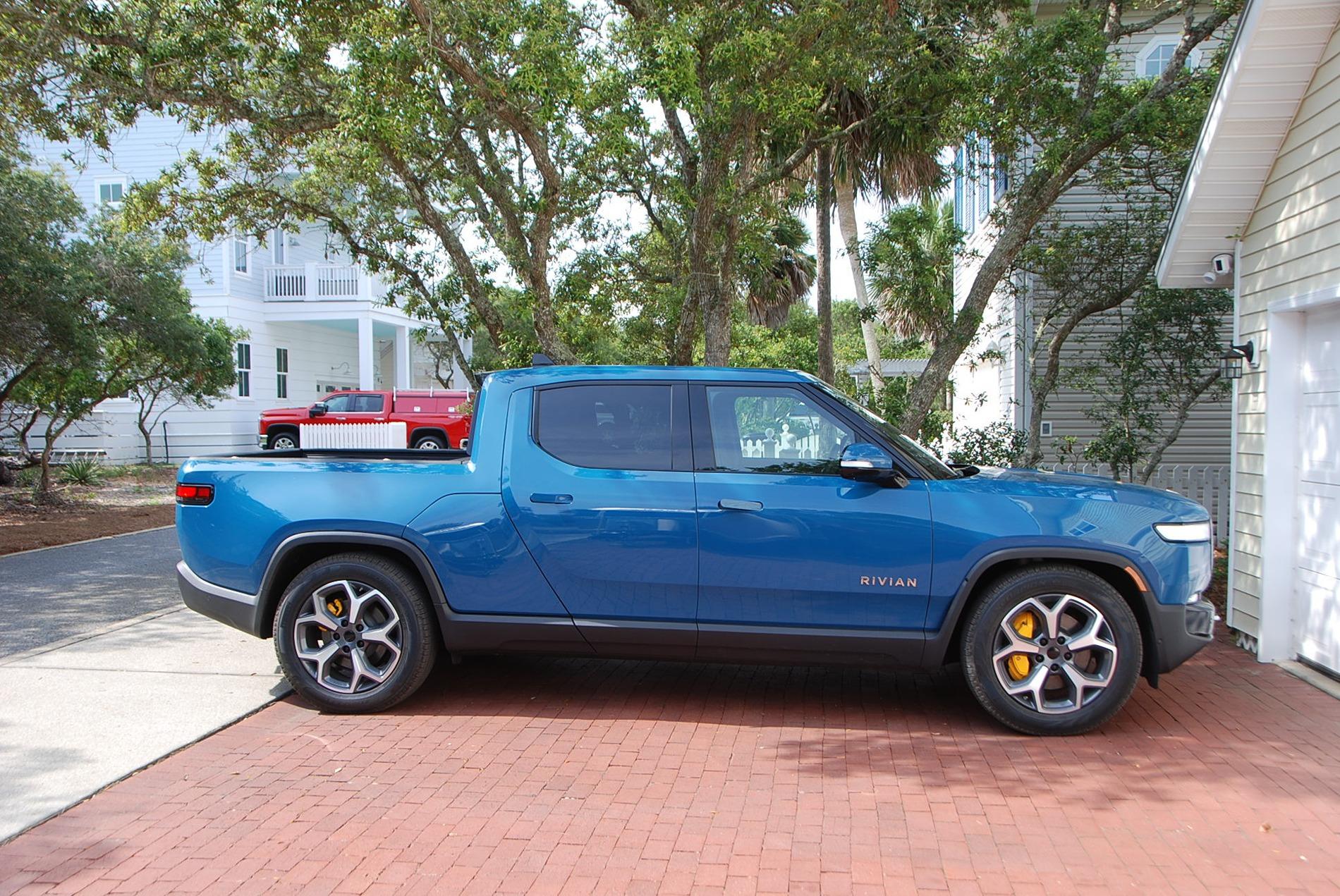
We have had our Dear Opal (our R1T) for a little over a year and a half now. Other than our return trip to Florida from the Rivian Factory, we had always charged Opal to 70%. In August of this year, Opal had her 12 volt battery replaced by Rivian Mobile Service. The mobile technician, who was very experienced (11 years with Tesla), told us that it is a good idea to occasionally charge the vehicle to 100% for the battery's good health. Since his visit, we have been varying Opal's charge level. We drive Opal daily, and usually charge her every five or six days. We have been charging her from 60% to 100%. We DO NOT leave her plugged in to the Rivian Wall Charger when not actually charging.

Opal's charging routine is based upon all of the information that we have gleaned from multiple sources. since we began our journey into EVdom.

Brian

Rivian R1T R1S Charge to 70% or 80% ? DSC_0010.JPG
 
Last edited:

M3_R2

Well-Known Member
Joined
Mar 30, 2024
Threads
0
Messages
124
Reaction score
152
Location
Canada
Vehicles
'18 M3 RWD, '23 M3 LR AWD, R2 reserved. Scout Terra cancelled 2/26
Clubs
 
On my M3's for my work week, I charge to 70% which gets me to work at about 52% and back home around 30% at worst. On weekends, I let it sit at 55% if there are no trips happening. Always keep it plugged in.

When temps drop to about 45°F in the fall, I'll increase that to 80% and will increase further as temps continue to drop into winter on a day-by-day basis depending on the forecast. For the rare days that it goes down to -30°F or lower, I'll go up to 95%. Attached garage is insulated so rarely gets below freezing.

If I get a max pack R1T some day, I'd imagine my sweet spot will be a bit larger which in theory would cause very slightly less degradation, all other factors being the same.

I used to fret about these things and have read tons of articles since my first purchase in 2018 but really, just drive it like you want and don't worry about it if you adhere to the basics like others have said. Definitely don't sit for an extended time in hot weather at a low SOC.

If not exceeding 70-80%, don't worry about L3 charging too much. Just enjoy your vehicle.
 

solaskaze

Well-Known Member
Joined
Nov 6, 2021
Threads
15
Messages
216
Reaction score
368
Location
Los Gatos
Vehicles
Tesla X,3, R1T Duo Max
Why should we keep it plugged in even when not charging? I have a short commute and only charge/plug in after several days (charging to 70%) or before a longer trip as needed, but otherwise don’t plug it in- I could but didn’t see the need.
To power everything else, of course: the goal for battery health other than SOC, temp, is: use it less. While you are not charging , the WC can power cabin preheating , 12V, Gary, vampire drain, etc. Also, simply to avoid waking up in the morning and realizing you meant to plug in, and didn’t , and now you don’t have enough range.
 

mkg3

Well-Known Member
Joined
Nov 19, 2021
Threads
90
Messages
2,787
Reaction score
3,701
Location
SoCal
Vehicles
R1S, Model 3, Outback, Artura
Clubs
 
I’ve gotten mixed answers on charging to 100% once in a while (once a month or so) to calibrate the battery and software. Anyone else hear this?
In the 90s to early 2000s, many of the laptop and small appliance batteries were made of NMH (Nickel-Metal-Hydride) and those cells developed "memory" of charing habits. As such, people were advised to let it drain down to 0%, then fully recharge periodically.

Modern battery, regardless of composition, do not have memory flaw. Having spent couple of years working on hybrid and electric aircraft concepts, I have seen many presentations and papers on the battery operations. If one were to summarize the best reliability and long lasting cells, its usually calls for 20~80% SOC range for Li-Ion cells. Clearly if needed to go lower or to full is use case dependent. If you change the chemical composition, there are different rule of thumb for the ideal charge levels (e.g., LFP really doesn't care and can charge to 100% on the regular basis).

My advise is not to worry about it much, and enjoy your vehicle as you see fit. Just try to keep it in the 20-80 range for the daily. Makes almost no difference if it's 60% or 80%. The only thing is to use around 50% for long term storage (e.g., on vacation for 3+ weeks). I ALWAYS charge to 90~100% on road trips and often run down to 10%. I have done so with our Tesla and our Rivian. No issues.
Sponsored


Top