Sponsored

Charging Speed. Not disappointed.

OP
OP

Joints4Sale

Well-Known Member
First Name
Erik
Joined
Dec 20, 2020
Threads
30
Messages
361
Reaction score
885
Location
Maryland, USA
Vehicles
Rivian R1S, e-tron GT,Ram CTD,R1250GSA, Tuareg 660
Occupation
Orthopaedic Implant Sales
Out of curiosity, do you have the underbody shield or no? Curious how this might affect rates.
Yes, I do. I didn't want to change anything from my original configuration to affect my delivery timing. Therefore I have the original "Offroad Package".
Sponsored


SeaGeo

Well-Known Member
First Name
Brice
Joined
Jan 12, 2021
Threads
50
Messages
5,673
Reaction score
10,212
Location
Seattle
Vehicles
Xc60 T8
Occupation
Engineer
I know it appeared to be getting to cold because the fans were not running so the assumption is it was not getting hot so because of the battery conditioning message it must have been too cold. Just to me temps in the 30s do not seem that cold. I also saw them driving around to heat up the battery that seemed to get the higher levels again which on the surface lends credibility to that theory. Wish we could have visibility to the battery temp.

I’ve actually had the fans kick on charging my Tesla in the low 30s, it is a much smaller battery (75 kWh) but also does not charge anywhere close to the Rivian peaks.
Warning: a lot of speculation is to follow

Agreed that the temp doesn't seem cold, but it's cold for optimal battery temps. I think part of the issue is that the size and thermal mass of the battery is quite large, and I'm guessing a discharge rate of about 0.25C just isn't warm enough to heat the batter up into the 70s when it's only 35 degrees outside. And the peak charging speeds for the R1T are also fairly low relative to the size of the battery, so it just may not generate enough heat from charging in the 20 to 50% range to warm things up much. Which is probably why you start seeing it throttle more as the SOC increases.

I fully agree, the lack of battery temp visibility is a frustration for me because it's not clear *why* battery conditioning is throttling the charging speeds.

Your tesla battery has less thermal mass like you noted, on the highway your discharging at a higher C rate (shorter range), and so I suspect think it generates more heat in the meat of the curve relative to the battery size.

At the end of the day, I expect Rivian will figure out their battery conditioning (and hopefully pre) so this isn't a thing.
 

kurtlikevonnegut

Well-Known Member
Joined
Sep 1, 2021
Threads
27
Messages
2,722
Reaction score
7,537
Location
SC/TX
Vehicles
2023 R1S DM, Honda Odyssey
Clubs
 
Warning: a lot of speculation is to follow

Agreed that the temp doesn't seem cold, but it's cold for optimal battery temps. I think part of the issue is that the size and thermal mass of the battery is quite large, and I'm guessing a discharge rate of about 0.25C just isn't warm enough to heat the batter up into the 70s when it's only 35 degrees outside. And the peak charging speeds for the R1T are also fairly low relative to the size of the battery, so it just may not generate enough heat from charging in the 20 to 50% range to warm things up much. Which is probably why you start seeing it throttle more as the SOC increases.

I fully agree, the lack of battery temp visibility is a frustration for me because it's not clear *why* battery conditioning is throttling the charging speeds.

Your tesla battery has less thermal mass like you noted, on the highway your discharging at a higher C rate (shorter range), and so I suspect think it generates more heat in the meat of the curve relative to the battery size.

At the end of the day, I expect Rivian will figure out their battery conditioning (and hopefully pre) so this isn't a thing.
The easy solution here is to live somewhere where it's >70° most of the year ?
 

rhuber

Well-Known Member
Joined
Sep 14, 2021
Threads
13
Messages
181
Reaction score
1,219
Location
Peoria, IL
Vehicles
Model S Plaid, 64 Mustang
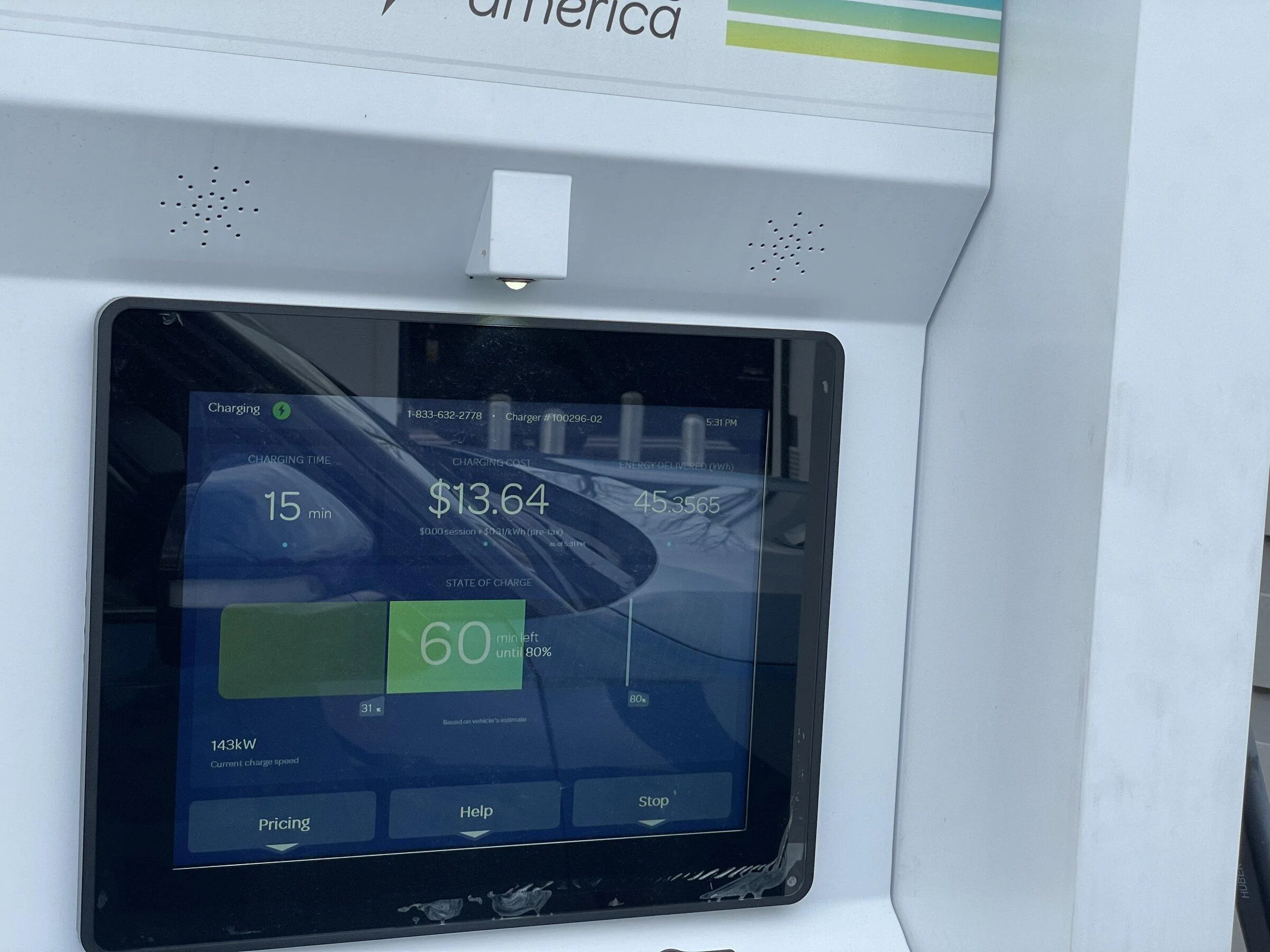
Annnnnddd.. here’s some proof that there is no 350A EA limit…


SeaGeo

Well-Known Member
First Name
Brice
Joined
Jan 12, 2021
Threads
50
Messages
5,673
Reaction score
10,212
Location
Seattle
Vehicles
Xc60 T8
Occupation
Engineer
Annnnnddd.. here’s some proof that there is no 350A EA limit…

Nice! Was it an ABB? Were you able to avoid the infamous battery conditioning?
 

Sponsored

rhuber

Well-Known Member
Joined
Sep 14, 2021
Threads
13
Messages
181
Reaction score
1,219
Location
Peoria, IL
Vehicles
Model S Plaid, 64 Mustang
It is a signet. And it didn’t throttle once
 

No.92

Well-Known Member
Joined
Oct 9, 2021
Threads
0
Messages
140
Reaction score
129
Location
California
Vehicles
Jeep Wrangler
I’m just a paint engineer so I don’t know shit about anything but I figured it’s worth keeping a mental note of, especially since there’s been hints of lack of adequate preconditioning.
I bet you're an expert on paint, which probably most of us are not :D
 

ajdelange

Well-Known Member
First Name
A. J.
Joined
Aug 1, 2019
Threads
9
Messages
2,883
Reaction score
2,319
Location
Virginia/Quebec
Vehicles
Tesla XLR+2019, Lexus, Landcruiser, R1T
Occupation
EE Retired
EA stations most probably adhere to CHaRIN standards. HPC350 stations are limited to 500A. To get 200 kw from a 500A supply requires 400V which an HPC350 station can easily supply if the vehicle asks for it. So nothing noteworthy in a car getting 190 kw from an EA 350 kw station.
 

the long way downunder

Well-Known Member
First Name
Adam
Joined
Jan 15, 2021
Threads
3
Messages
944
Reaction score
998
Location
charging
Vehicles
Tesla
Occupation
WFH
This actually maps pretty closely to what @OutofSpecKyle tested in his video.

Here's the data he collected:


The data points from this charge map almost identically to the "theoretical" curve from Kyle.

SOC@Joints4Sale@OutofSpecKyle
42%190 kW193 kW
49%197 kW196 kW
60%162 kW165 kW (59% SOC)
80%81 kW81 kW (79% SOC)

One thing to note is that Kyle's data shows a drop to lower charging speeds at 60% and 80%, but I just took the number before that for comparison because it's clearly a SW plateau.
That's what I've been seeing. I wonder if starting with a cool, balanced battery at say 20% would result in the 60% step down happening at a higher percentage. Hopefully Rivian hasn't hard coded those steps; why would they? Is this a kludge till they finish code for pre-conditioning, etc.?
I was told "200 +" is the limit today and "300" is the expected max.
The 800v LFP changes everything and hopefully arrives with more than the discarded NMC 180kWh.
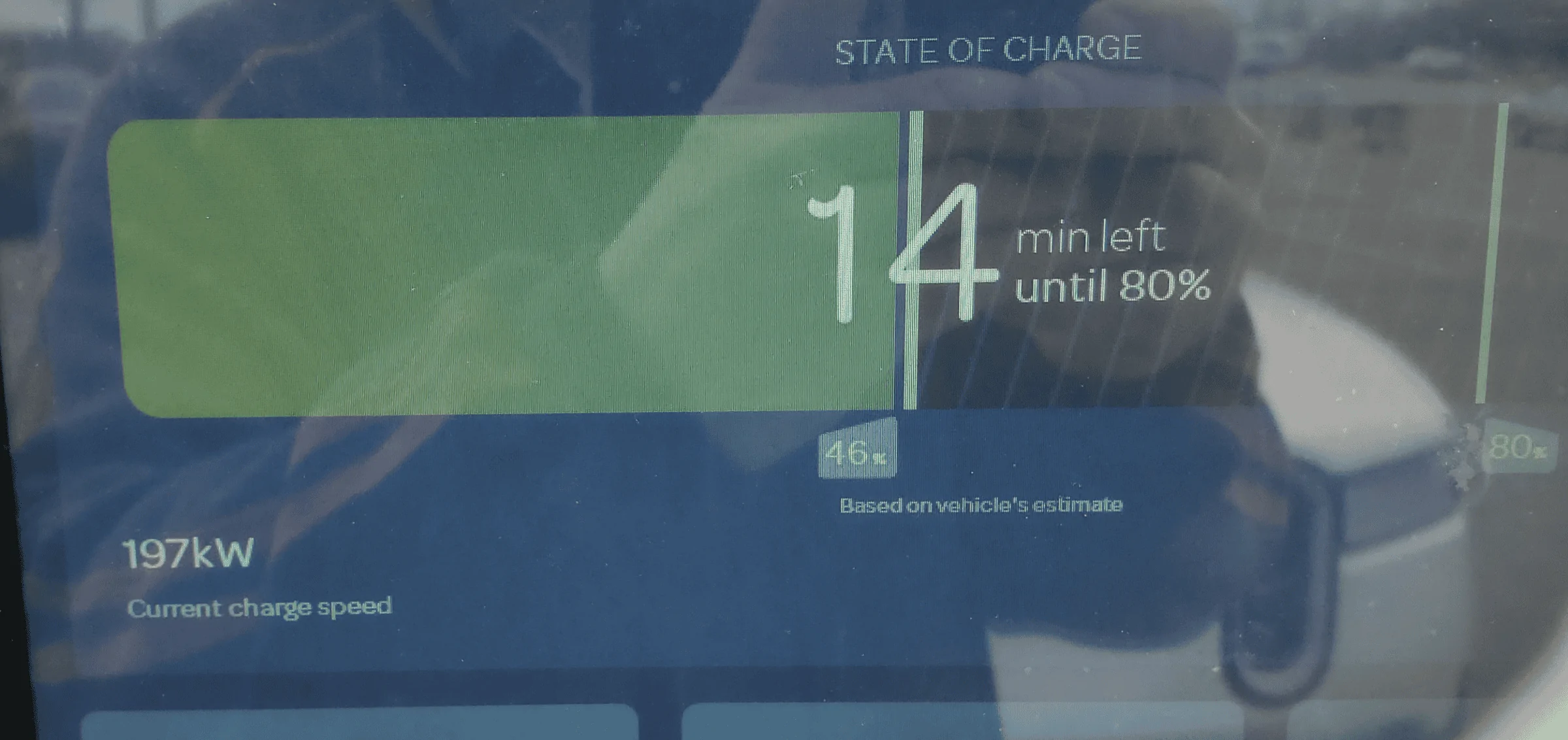
197kW seems to be a common ceiling:
Rivian R1T R1S Charging Speed. Not disappointed. 1649016214800
 

Sponsored

SeaGeo

Well-Known Member
First Name
Brice
Joined
Jan 12, 2021
Threads
50
Messages
5,673
Reaction score
10,212
Location
Seattle
Vehicles
Xc60 T8
Occupation
Engineer
That's 300A limited.
180kw+? The R1T is would max out at about 135kw at 300A with peak pack voltage at about 450v.

That's what I've been seeing. I wonder if starting with a cool, balanced battery at say 20% would result in the 60% step down happening at a higher percentage. Hopefully Rivian hasn't hard coded those steps; why would they? Is this a kludge till they finish code for pre-conditioning, etc.?
I was told "200 +" is the limit today and "300" is the expected max.
The 800v LFP changes everything and hopefully arrives with more than the discarded NMC 180kWh.
197kW seems to be a common ceiling:
1649016214800.png
196kw is the max we've seen so far with Rivian limiting it to about 450Amps.

The steps in that table are it throttling a little early, most likely due to thermals.

EA stations most probably adhere to CHaRIN standards. HPC350 stations are limited to 500A. To get 200 kw from a 500A supply requires 400V which an HPC350 station can easily supply if the vehicle asks for it. So nothing noteworthy in a car getting 190 kw from an EA 350 kw station.
Welcome back. The topic at hand is a large number of EA stations (though not all) are not giving out more than about 350A. Even when they should be capable of 500A.

Cause: unknown. Could never EA. Could be how Rivian and Mercedes are communicating with a specific series of chargers.
 

the long way downunder

Well-Known Member
First Name
Adam
Joined
Jan 15, 2021
Threads
3
Messages
944
Reaction score
998
Location
charging
Vehicles
Tesla
Occupation
WFH
180kw+? The R1T is would max out at about 135kw at 300A with peak pack voltage at about 450v.
I think it's 350A, but I'm also not sure about the actual voltage, just to say it's not pack limitation.
 

the long way downunder

Well-Known Member
First Name
Adam
Joined
Jan 15, 2021
Threads
3
Messages
944
Reaction score
998
Location
charging
Vehicles
Tesla
Occupation
WFH
196kw is the max we've seen so far with Rivian limiting it to about 450Amps.

The steps in that table are it throttling a little early, most likely due to thermals.


Welcome back. The topic at hand is a large number of EA stations (though not all) are not giving out more than about 350A. Even when they should be capable of 500A.

Cause: unknown. Could never EA. Could be how Rivian and Mercedes are communicating with a specific series of chargers.
My R1T showed a steady 197kW (flickering around that number, I think I saw 200+ for a few blinks but it wasn't sustained, so it's not really relevant and could just be software in that instrument readout.)

According to Kyle / OoW the steps were arbitrary (not related to temp) and the battery temp management was the initial dip-recovery at 25% then the zig-zig steps down.

For now, I think we can conclude Rivian will go to a heat pump for the Max Pack with LFP and hopefully more than 180kWh, and the software will have fleshed out pre-conditioning, etc.
 

rhuber

Well-Known Member
Joined
Sep 14, 2021
Threads
13
Messages
181
Reaction score
1,219
Location
Peoria, IL
Vehicles
Model S Plaid, 64 Mustang
ARE YOU NOT ENTERTAINED?!

Rivian R1T R1S Charging Speed. Not disappointed. FE4A4074-5ACA-49AD-8D6D-032DAEAA7124
Sponsored


Top