Sponsored

NEMA 5-20 option?

rpo

Well-Known Member
First Name
Ryan
Joined
Feb 28, 2023
Threads
8
Messages
140
Reaction score
202
Location
Bellingham, WA
Vehicles
R1S
Occupation
Finance
Ok then. Measure your receptacle voltage. I guarantee it’s less than 120. Where’d 42% come from? 12 to 16 amps is 33% more. Still minuscule difference charging at 120. Good luck!
33% does not take into account the charging overhead that doesn't increase with the additional amperage. It's certainly more than a 33% increase in power actually going into the battery.

P.S. 124 volts at my house . 249 across the 240 with no load.
Sponsored

 

Cosmacelf

Well-Known Member
Joined
Nov 11, 2020
Threads
20
Messages
442
Reaction score
530
Location
San Diego, CA
Vehicles
Rivian R1S, Tesla Model X
Occupation
Software
Ok then. Measure your receptacle voltage. I guarantee it’s less than 120. Where’d 42% come from? 12 to 16 amps is 33% more. Still minuscule difference charging at 120. Good luck!
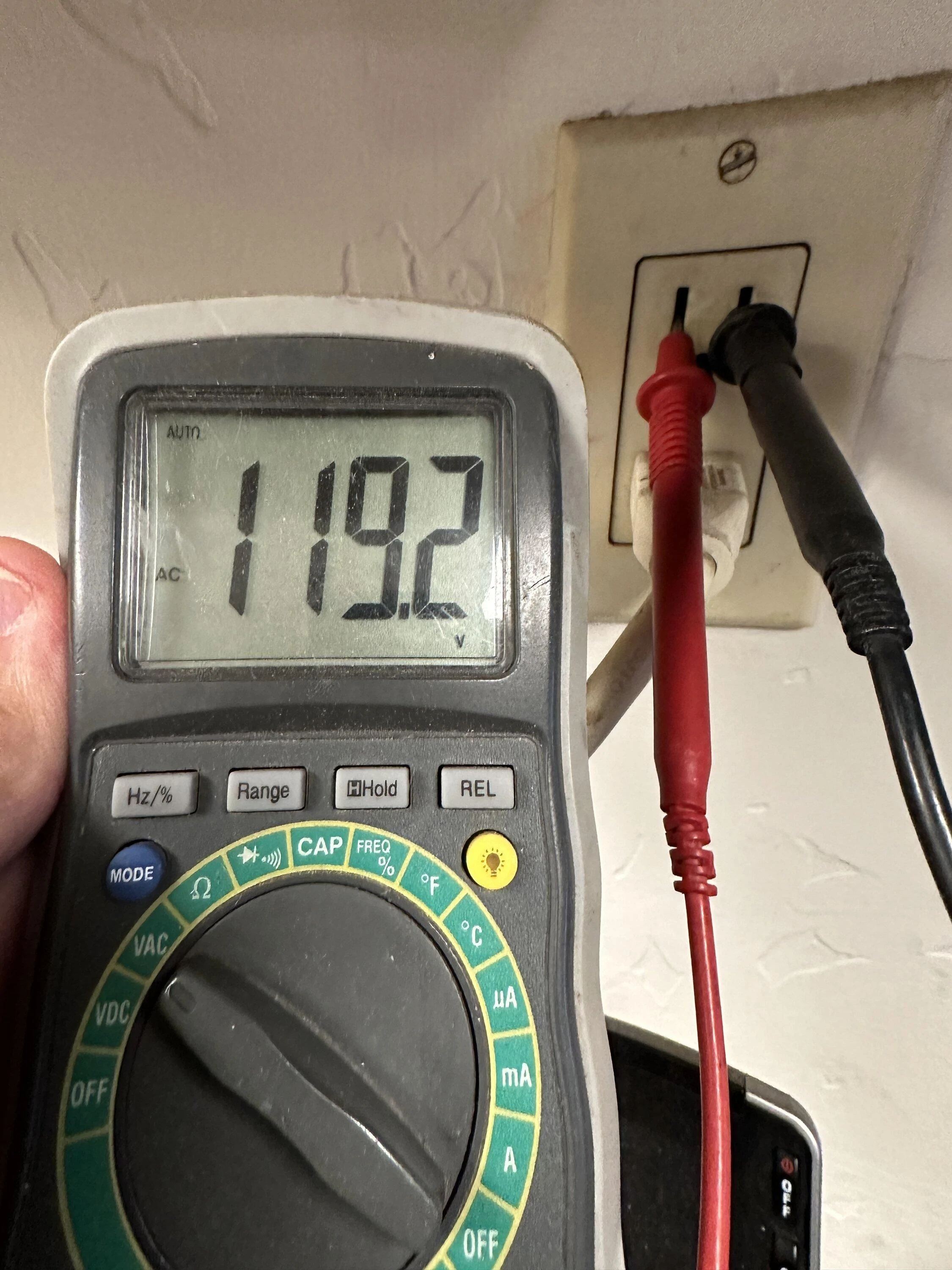
I can’t believe you made me do this. Nominal system voltage is 120/240 there will be some losses on various circuits of course.


Rivian R1T R1S NEMA 5-20 option? IMG_5542
 
  • Like
Reactions: pdq

Cosmacelf

Well-Known Member
Joined
Nov 11, 2020
Threads
20
Messages
442
Reaction score
530
Location
San Diego, CA
Vehicles
Rivian R1S, Tesla Model X
Occupation
Software
Ok then. Measure your receptacle voltage. I guarantee it’s less than 120. Where’d 42% come from? 12 to 16 amps is 33% more. Still minuscule difference charging at 120. Good luck!
And it is 42% more into the battery because the car itself steals some overhead current to run the car computer, cooling pump, fan, etc. It is negligible at higher power, but makes a difference at low power.
 

WSea

Well-Known Member
First Name
Patrick
Joined
Mar 6, 2022
Threads
39
Messages
1,678
Reaction score
2,044
Location
West seattle
Vehicles
R1T, Outback
Occupation
Architect
I can’t believe you made me do this. Nominal system voltage is 120/240 there will be some losses on various circuits of course.


IMG_5542.jpeg
Fun experiment?
 

rhumbliner

Well-Known Member
First Name
thomas
Joined
Nov 8, 2020
Threads
12
Messages
335
Reaction score
527
Location
Bend
Vehicles
R1T & Model X
Occupation
Retired
Ok then. Measure your receptacle voltage. I guarantee it’s less than 120.
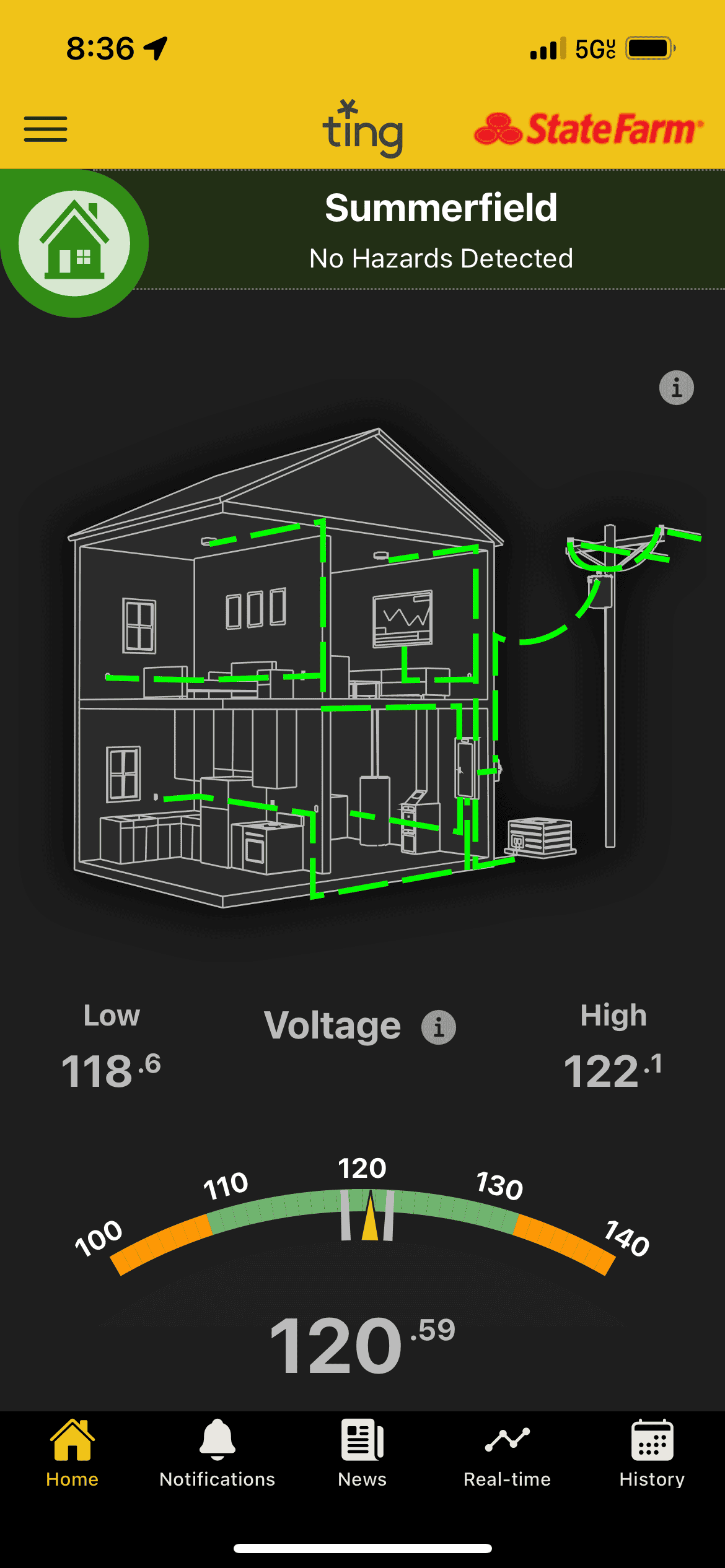
Your electric utility may be subpar. My voltage rarely drops below 120v.
Rivian R1T R1S NEMA 5-20 option? IMG_8917
 
  • Like
Reactions: rpo

Sponsored

rpo

Well-Known Member
First Name
Ryan
Joined
Feb 28, 2023
Threads
8
Messages
140
Reaction score
202
Location
Bellingham, WA
Vehicles
R1S
Occupation
Finance
And it is 42% more into the battery because the car itself steals some overhead current to run the car computer, cooling pump, fan, etc. It is negligible at higher power, but makes a difference at low power.
BINGO.

For another data point, on one of my prior Model S's, I actually set the amps to 7 for nearly 24 hours because of a bad circuit that was causing so much voltage sag at 12 amps that I was concerned about overheating a wire (10 volt drop). Those 7 amps resulted in about 1 mile of charging every hour, but 12 amps is consistently 3 miles (sometimes 3.5ish). The car's overhead was therefore somewhere around 4.5 amps just to run the systems needed to charge before any current made it to the battery (at warm temps too). Increasing from 12 to 16 amps is much more than a 25% increase in actual electricity being dumped into the battery.

Using the data from my old Tesla, for every 2.5 amps over the 4.5 amp overhead, it would charge 1 mile per hour. That results in 4.6 miles per hour of charging vs 3 miles at 12 amps. That is just over a 50% increase in the charge rate. Totally worth it.

That said, does anyone know if a Rivian will charge when plugged into a 14-50 if there's only one hot (120v). I did this all the time when travelling with my Model S using a dozen adapters I made nearly 10 years ago. The Tesla did not care if there was only one hot, and I could dial in the amps in the car to exactly what the source could provide on a continuous load. My way of plugging into a NEMA 5-20 was to use a 5-20 to 14-50 adapter and then plug the mobile charger into that while setting the car to 16 amps. And that was probably the least ridiculous adapter situation I put together. My Rivian is on its way, so I plan on testing this next week after delivery anyways.
 

Cosmacelf

Well-Known Member
Joined
Nov 11, 2020
Threads
20
Messages
442
Reaction score
530
Location
San Diego, CA
Vehicles
Rivian R1S, Tesla Model X
Occupation
Software
BINGO.

For another data point, on one of my prior Model S's, I actually set the amps to 7 for nearly 24 hours because of a bad circuit that was causing so much voltage sag at 12 amps that I was concerned about overheating a wire (10 volt drop). Those 7 amps resulted in about 1 mile of charging every hour, but 12 amps is consistently 3 miles (sometimes 3.5ish). The car's overhead was therefore somewhere around 4.5 amps just to run the systems needed to charge before any current made it to the battery (at warm temps too). Increasing from 12 to 16 amps is much more than a 25% increase in actual electricity being dumped into the battery.

Using the data from my old Tesla, for every 2.5 amps over the 4.5 amp overhead, it would charge 1 mile per hour. That results in 4.6 miles per hour of charging vs 3 miles at 12 amps. That is just over a 50% increase in the charge rate. Totally worth it.

That said, does anyone know if a Rivian will charge when plugged into a 14-50 if there's only one hot (120v). I did this all the time when travelling with my Model S using a dozen adapters I made nearly 10 years ago. The Tesla did not care if there was only one hot, and I could dial in the amps in the car to exactly what the source could provide on a continuous load. My way of plugging into a NEMA 5-20 was to use a 5-20 to 14-50 adapter and then plug the mobile charger into that while setting the car to 16 amps. And that was probably the least ridiculous adapter situation I put together. My Rivian is on its way, so I plan on testing this next week after delivery anyways.
I don’t know about the Rivian since I haven’t tested it, but I suspect it would work with a 120V source. All the Rivian adapter does is communicate the amp rating, not the voltage amount. Now, be careful in that the Tesla EVSE wanted the 120V hot and neutral on the correct pins, if you swapped them, it wouldn’t work. I suspect the Rivian EVSE would be the same.
 
OP
OP

922110

Well-Known Member
Joined
Sep 3, 2019
Threads
6
Messages
95
Reaction score
61
Location
USA
Vehicles
2018 Range Rover Sport Autobiography 5.0
An extra 4amp at 110v is miniscule charging this battery...probably an extra 1/3 mile per hour
It's 33% faster charging. I'd say that's well worth it if it means my cost to charge is $0.
 

retart13

Member
First Name
Nino
Joined
Sep 4, 2021
Threads
2
Messages
21
Reaction score
14
Location
Michigan
Vehicles
BMW m340i, R1S
BINGO.

For another data point, on one of my prior Model S's, I actually set the amps to 7 for nearly 24 hours because of a bad circuit that was causing so much voltage sag at 12 amps that I was concerned about overheating a wire (10 volt drop). Those 7 amps resulted in about 1 mile of charging every hour, but 12 amps is consistently 3 miles (sometimes 3.5ish). The car's overhead was therefore somewhere around 4.5 amps just to run the systems needed to charge before any current made it to the battery (at warm temps too). Increasing from 12 to 16 amps is much more than a 25% increase in actual electricity being dumped into the battery.

Using the data from my old Tesla, for every 2.5 amps over the 4.5 amp overhead, it would charge 1 mile per hour. That results in 4.6 miles per hour of charging vs 3 miles at 12 amps. That is just over a 50% increase in the charge rate. Totally worth it.

That said, does anyone know if a Rivian will charge when plugged into a 14-50 if there's only one hot (120v). I did this all the time when travelling with my Model S using a dozen adapters I made nearly 10 years ago. The Tesla did not care if there was only one hot, and I could dial in the amps in the car to exactly what the source could provide on a continuous load. My way of plugging into a NEMA 5-20 was to use a 5-20 to 14-50 adapter and then plug the mobile charger into that while setting the car to 16 amps. And that was probably the least ridiculous adapter situation I put together. My Rivian is on its way, so I plan on testing this next week after delivery anyways.
Did you ever have a chance to check it out to see if your method works?
 

NY LI'er

Member
First Name
Han
Joined
Sep 25, 2023
Threads
0
Messages
13
Reaction score
5
Location
Manhasset, NY
Vehicles
delivery on 9/29/23 R1S adventure el cap quad
Occupation
health


Top